Which Compound to Use to Manufacture a Car Wheel Cover
What Is It?
NEXXALON™ Mineral with Glass Fiber Reinforced Compound combines both mineral filler and glass fiber in the same PA6 matrix, at combined loadings up to about 40%, rather than relying on either reinforcement alone.
How It's Manufactured
Both the mineral filler and glass fiber are metered into the PA6 melt on a twin-screw extruder in a single compounding pass, with screw design tuned so the fiber survives with adequate length while the mineral disperses evenly through the matrix.
Manufacturing Process for This Application
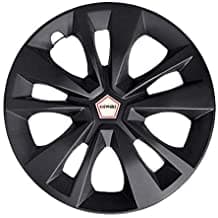
Wheel covers are injection molded from the dried compound. A wheel cover is a large, thin, cosmetically visible part mounted in a location that sees continuous vibration and road heat — mold design has to manage the combined shrinkage behavior of both reinforcements to avoid warping the disc flat.
Why Polymer Choice Matters Here
Glass fiber alone gives strength but can warp a large flat part unevenly; mineral filler alone gives a smoother, more even shrinkage but less stiffness. A wheel cover needs both — enough stiffness to survive being mounted, removed, and occasionally struck by road debris, and even enough shrinkage that it stays flat rather than bowing.
Why This Compound Is Suited
The combined mineral-glass reinforcement is explicitly suited to "parts where warpage control is important" alongside moderate-to-good mechanical and thermal properties — exactly the profile a wheel cover needs, and one of its explicitly listed applications.
Nexxa Compounds is a leading manufacturer of PA6 compounds for car wheel cover applications in India, supplying some of the largest manufacturers across India and internationally.
Related Posts
Which Compound to Use to Manufacture a Vehicle Fuel Cap
Why glass-filled PA6 is the standard compound for automotive fuel caps, how it is manufactured, and which grades to consider as alternatives.
Which Compound to Use to Manufacture a Car Door Handle
Why unfilled PA6 is specified for exterior door handles, and when to step up to a reinforced grade instead.
Which Compound to Use to Manufacture a Plastic Helmet Lock
Why an impact-modified super tough PA6 grade is used for helmet locks and other repeated-hammering parts.